

The Shield Beneath Us
Week 4 of Where It Starts, a collaboration with History EHX, follows Craig Baird onto the Canadian Shield, a landscape that helps explain why Canada has endured empires, invasions, economic pressure.

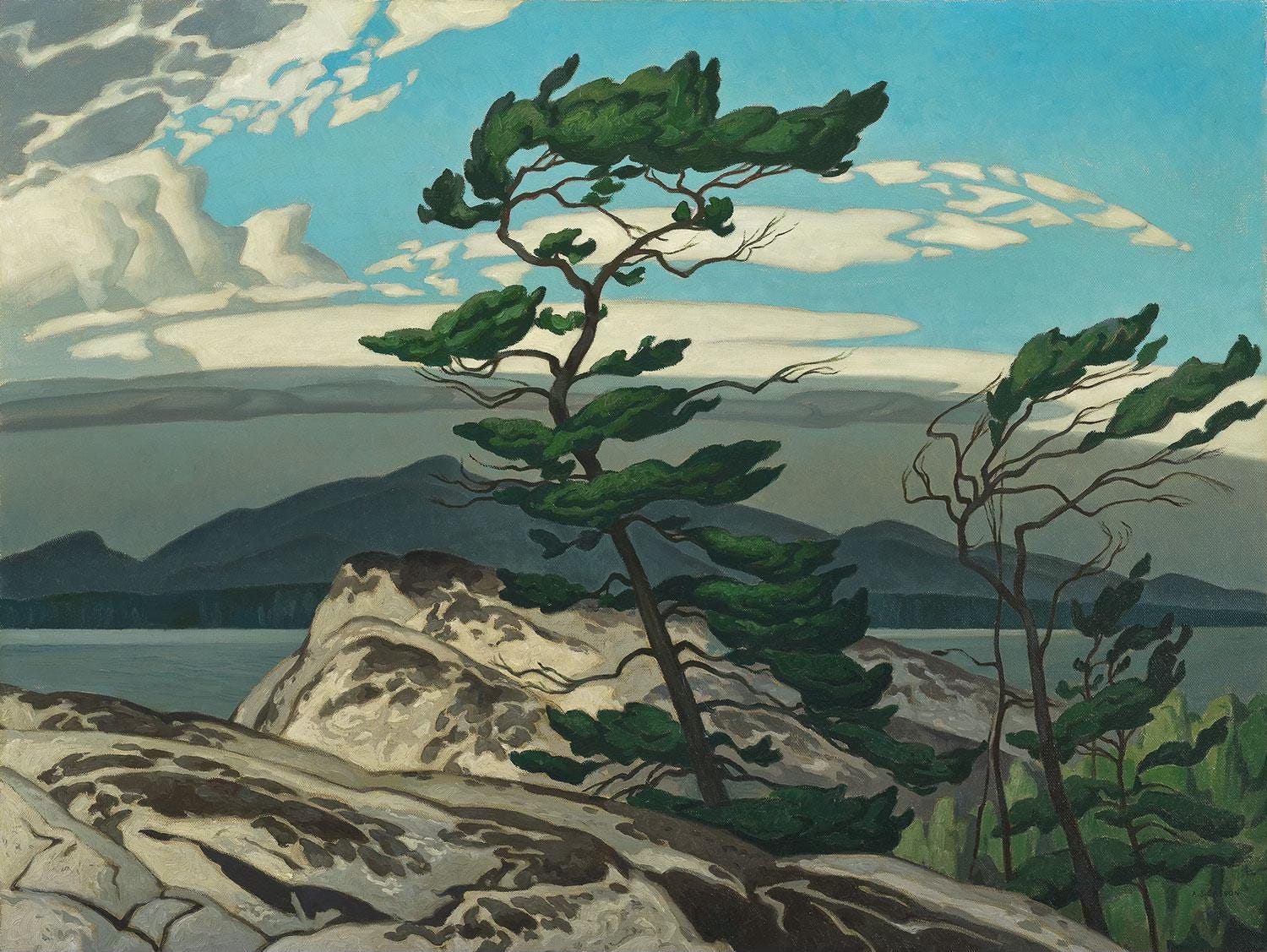
Four weeks into Where It Starts, what I appreciate most about Craig Baird’s writing is the way he looks at place. He does not write about geography as backdrop. He looks for what the land reveals about the country built on it. This week, that land is the Canadian Shield, the rugged, ancient landscape the Group of Seven helped turn into one of Canada’s defining images of itself.
A prairie road. A rock in a field. A marker at the centre of the country. A stretch of ancient stone running beneath much of Canada. In Craig’s eyes, these are not just places to visit. They are clues to what has held this country together.
That feels especially relevant now. Canada is in a period when the question of what holds us together is not abstract. Economic pressure, political division, foreign influence, and the constant pull of the United States have all made the question more immediate. What is Canada, really? What makes it durable? What allows a country this large, this regional, and this varied to remain a united country at all?
This week, Craig takes us into Ontario and onto the Canadian Shield.
It is one of the oldest geological formations on Earth. It is vast, difficult, and often inconvenient. Railways had to blast through it. Roads had to work around it. People have had to adapt to it.
Craig sees in the Shield something recognizably Canadian: strength that does not announce itself, endurance that does not need spectacle, and a country that has been shaped by pressure without being defined by it.
Reading it, you may find yourself thinking less about rock, and more about what it takes for a country to last.
Welcome to Week 4 of Where It Starts.
The Shield
This summer, I am embarking on the biggest trip of my life. From start to finish, 14,000 kilometres, give or take a few hundred kilometres. If I can make it up to Dawson City, you can add another couple thousand kilometres to the itinerary.
Canada is a lot bigger than people realize. Last year I journeyed through Alberta, Saskatchewan, and half of Manitoba. That trip covered 6,000 kilometres alone. Our vastness is our strength, but it is also a weakness. Our provinces are bigger than most nations, and it makes us feel like we live in a country within a country. I began the series with a post about my home province of Alberta and am moving my way east. This week, we are heading into Ontario.
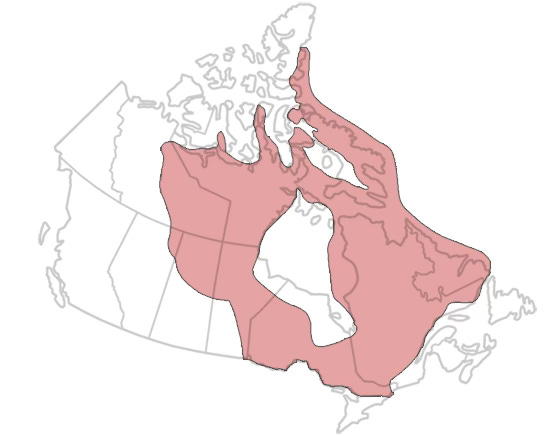
The Canadian Shield
The boreal forest and the Great Lakes are stunning features of the Canadian landscape, but even they pale in comparison to the one that, to me, defines the country. As you drive into Ontario, you leave the prairies and enter the world of the Shield.
It covers roughly eight million square kilometres, from Baffin Island to southern Ontario, from the edge of Manitoba to Labrador. Nearly the entire province of Ontario rests on this immense geological foundation.
It is one of the oldest geological features on Earth, with some areas dating back more than four billion years. Where mountains once stood, there is now the Shield.
More than any other feature in the country, the Shield represents Canada’s strength to me. It feels eternal, and in a way, it is.
Those same rocks I see as I drive along the Trans-Canada Highway were there when the great ice sheets covered the land. They were there when Indigenous peoples first moved across this territory and came to know the Great Lakes. They were there when men blasted through the region to build the railway, and they were there when we repeated that work to build the highway. For all our attempts to alter the landscape of the Shield, it has endured.
That is Canada to me.
Superpowers have shaped our history, but they have not defined us. There were the Spanish on the west coast, the Russians in the North Pacific, and the English and French across the sea. And, of course, there has always been the United States. Our neighbour to the south. The elephant in the bed that can disturb our tranquil sleep with the tiniest movement.
During the American Revolution, their soldiers invaded, and we pushed them back. In the War of 1812, when the Americans believed conquering Canada would be as simple as marching in, they learned otherwise. They have tried to overwhelm us economically and culturally, too. Still, we have resisted.
When Donald Trump talked of annexing us and put tariffs in place, Canadians answered with Buy Canadian and forced the Americans to take notice once again.
Like the Shield, Canadians will not be moved.
We may sometimes think of ourselves as a middle power, shaped by larger nations. But in truth, we have often made those nations adapt to us.
Carving Through
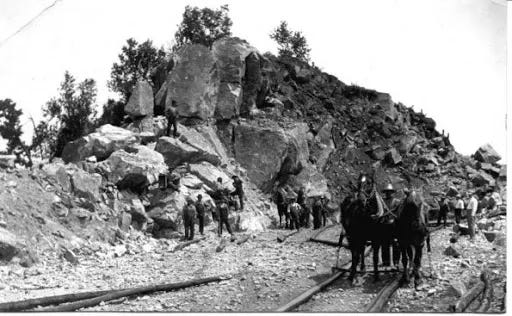
When crews came through to build the Canadian Pacific Railway, the Shield did not make it easy. The railway had to blast through the rock and adapt itself to the Shield. Decades later, the same struggle was repeated with the Trans-Canada Highway. The Shield’s underlying features do not change, even as the world around it does.
Canada is like that.
We are quiet, friendly, and often inclined to keep to ourselves. Yet we have shaped the world around us more than most people realize.
Basketball, hockey, even the early roots of American football, all have deep Canadian connections. Hollywood was shaped by Canadians.
Preventing nuclear war? Canadians have played their part through diplomacy, peacekeeping, and service abroad.
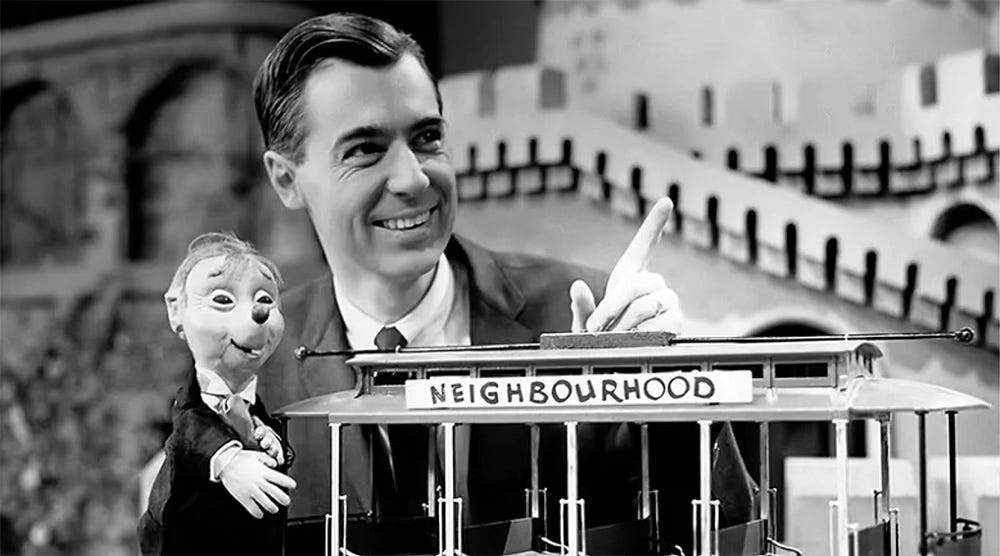
Americans love Mr. Rogers. His television career began in the United States, but it was at the CBC in Canada that he first stepped in front of the camera as “Misterogers”, developing the approach that later became Mister Rogers’ Neighborhood.
When humans landed on the Moon, Canadian scientists and engineers helped NASA make it happen. The first legs to touch the Moon on the lander were designed and manufactured in Quebec.
How about Star Wars and 2001: A Space Odyssey? Give a nod to the National Film Board and its groundbreaking films that helped inspire George Lucas and Stanley Kubrick.
We pushed farther inland than anyone else on D-Day, and during the First World War, Canadian soldiers earned a reputation as some of the most formidable troops on the Western Front.
The world has been shaped, in ways large and small, by Canada.
A Transformative Time
Right now, Canada is going through something that feels unique in its history. Old alliances, including the one with the United States, no longer feel as reliable as they once did. Alberta is contemplating separation, which will almost certainly fail.
To survive in a changing world order, Canada does not need to become something else. It needs to remember what it already is.
We are looking toward new alliances, economically and militarily. We are choosing how we want to proceed and allowing the world to adapt to us, rather than constantly adapting ourselves to the world.

When this period has passed, Canada will still be here.
We were here through French and British dominance in the 18th and 19th centuries. We survived the World Wars and the Cold War. In an increasingly small and homogenized world, we are still carrying with us what it means to be Canadian.
In the third decade of the 21st century, we are taking a lesson from the Shield. We are not allowing others to tell us who we are, or who we should become.
I know that work crews, surveyors, fur traders, First Nations, and the people who populate the towns across the Shield may not always look upon it with fondness.
I do.
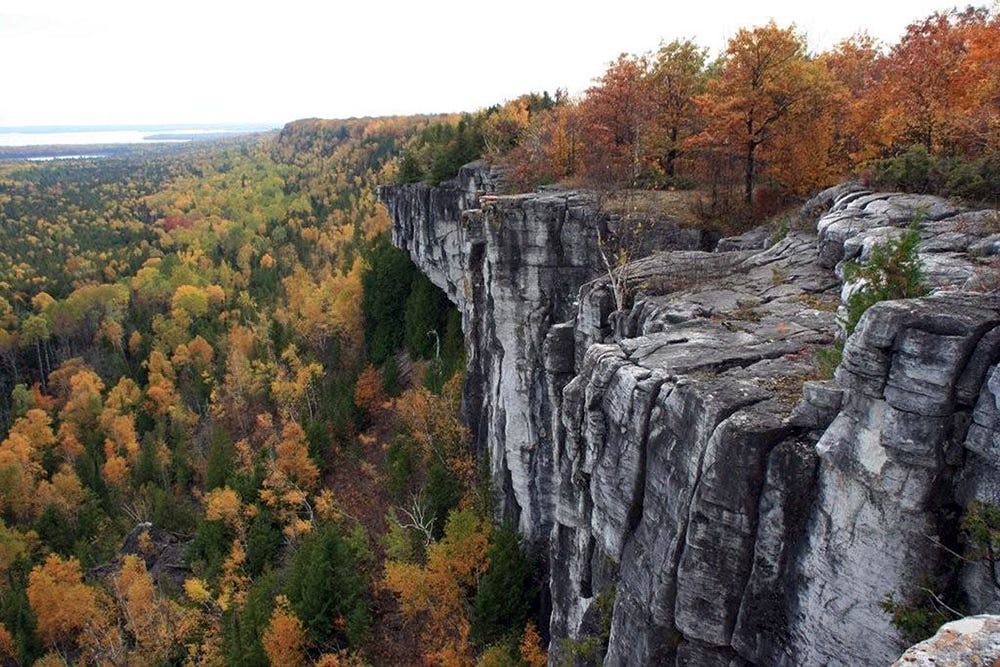
For me, it is Canada’s symbol to the world. A geological structure so large it can be seen from space, yet one that blends into the planet without demanding attention. You know it is there, but sometimes you have to look carefully to truly see it.
And when you get close to it, you understand its strength.
Canada may never be a superpower in the way empires have understood that word. We may never be one of the great mountains of civilization that tower over history and demand awe.
Instead, we can be the Shield. Something shaped by mountains. Changed by time. Worn down, perhaps, but never conquered.
And always respected.
Join me next week as I move into Quebec.

Why this journey matters
Craig and Berton (yes, named after Pierre Berton) are driving fourteen thousand kilometres this summer, from Alberta to the Atlantic, up to Newfoundland, across to the Pacific, and home by way of the Alaska Highway. Three oceans. Ten provinces. One book and a series of videos at the end of it.
That book is the point.
Never before in our lifetimes has it been more important for Canadians to understand the roots of what makes our country great.
He is funding this journey himself. A GoFundMe covers gas, ferries, campsites, and the thousand small costs of documenting a country at this scale.
Support the 2026 Canada Tour →
We are welcoming Craig and Berton to Atlantic Canada with a proper Maritime feast when they arrive. Everyone who helps get them here gets a seat at the table.
~ Maritimer
efining images of itself.
A prairie road. A rock in a field. A marker at the centre of the country. A stretch of ancient stone running beneath much of Canada. In Craig’s eyes, these are not just places to visit. They are clues to what has held this country together.
That feels especially relevant now. Canada is in a period when the question of what holds us together is not abstract. Economic pressure, political division, foreign influence, and the constant pull of the United States have all made the question more immediate. What is Canada, really? What makes it durable? What allows a country this large, this regional, and this varied to remain a united country at all?
This week, Craig takes us into Ontario and onto the Canadian Shield.
It is one of the oldest geological formations on Earth. It is vast, difficult, and often inconvenient. Railways had to blast through it. Roads had to work around it. People have had to adapt to it.
Craig sees in the Shield something recognizably Canadian: strength that does not announce itself, endurance that does not need spectacle, and a country that has been shaped by pressure without being defined by it.
Reading it, you may find yourself thinking less about rock, and more about what it takes for a country to last.
Welcome to Week 4 of Where It Starts.
The Shield
This summer, I am embarking on the biggest trip of my life. From start to finish, 14,000 kilometres, give or take a few hundred kilometres. If I can make it up to Dawson City, you can add another couple thousand kilometres to the itinerary.
Canada is a lot bigger than people realize. Last year I journeyed through Alberta, Saskatchewan, and half of Manitoba. That trip covered 6,000 kilometres alone. Our vastness is our strength, but it is also a weakness. Our provinces are bigger than most nations, and it makes us feel like we live in a country within a country. I began the series with a post about my home province of Alberta and am moving my way east. This week, we are heading into Ontario.
The Canadian Shield
The boreal forest and the Great Lakes are stunning features of the Canadian landscape, but even they pale in comparison to the one that, to me, defines the country. As you drive into Ontario, you leave the prairies and enter the world of the Shield.
It covers roughly eight million square kilometres, from Baffin Island to southern Ontario, from the edge of Manitoba to Labrador. Nearly the entire province of Ontario rests on this immense geological foundation.
It is one of the oldest geological features on Earth, with some areas dating back more than four billion years. Where mountains once stood, there is now the Shield.
More than any other feature in the country, the Shield represents Canada’s strength to me. It feels eternal, and in a way, it is.
Those same rocks I see as I drive along the Trans-Canada Highway were there when the great ice sheets covered the land. They were there when Indigenous peoples first moved across this territory and came to know the Great Lakes. They were there when men blasted through the region to build the railway, and they were there when we repeated that work to build the highway. For all our attempts to alter the landscape of the Shield, it has endured.
That is Canada to me.
Superpowers have shaped our history, but they have not defined us. There were the Spanish on the west coast, the Russians in the North Pacific, and the English and French across the sea. And, of course, there has always been the United States. Our neighbour to the south. The elephant in the bed that can disturb our tranquil sleep with the tiniest movement.
During the American Revolution, their soldiers invaded, and we pushed them back. In the War of 1812, when the Americans believed conquering Canada would be as simple as marching in, they learned otherwise. They have tried to overwhelm us economically and culturally, too. Still, we have resisted.
When Donald Trump talked of annexing us and put tariffs in place, Canadians answered with Buy Canadian and forced the Americans to take notice once again.
Like the Shield, Canadians will not be moved.
We may sometimes think of ourselves as a middle power, shaped by larger nations. But in truth, we have often made those nations adapt to us.
Carving Through
When crews came through to build the Canadian Pacific Railway, the Shield did not make it easy. The railway had to blast through the rock and adapt itself to the Shield. Decades later, the same struggle was repeated with the Trans-Canada Highway. The Shield’s underlying features do not change, even as the world around it does.
Canada is like that.
We are quiet, friendly, and often inclined to keep to ourselves. Yet we have shaped the world around us more than most people realize.
Basketball, hockey, even the early roots of American football, all have deep Canadian connections. Hollywood was shaped by Canadians.
Preventing nuclear war? Canadians have played their part through diplomacy, peacekeeping, and service abroad.
Americans love Mr. Rogers. His television career began in the United States, but it was at the CBC in Canada that he first stepped in front of the camera as “Misterogers”, developing the approach that later became Mister Rogers’ Neighborhood.
When humans landed on the Moon, Canadian scientists and engineers helped NASA make it happen. The first legs to touch the Moon on the lander were designed and manufactured in Quebec.
How about Star Wars and 2001: A Space Odyssey? Give a nod to the National Film Board and its groundbreaking films that helped inspire George Lucas and Stanley Kubrick.
We pushed farther inland than anyone else on D-Day, and during the First World War, Canadian soldiers earned a reputation as some of the most formidable troops on the Western Front.
The world has been shaped, in ways large and small, by Canada.
A Transformative Time
Right now, Canada is going through something that feels unique in its history. Old alliances, including the one with the United States, no longer feel as reliable as they once did. Alberta is contemplating separation, which will almost certainly fail.
To survive in a changing world order, Canada does not need to become something else. It needs to remember what it already is.
We are looking toward new alliances, economically and militarily. We are choosing how we want to proceed and allowing the world to adapt to us, rather than constantly adapting ourselves to the world.
When this period has passed, Canada will still be here.
We were here through French and British dominance in the 18th and 19th centuries. We survived the World Wars and the Cold War. In an increasingly small and homogenized world, we are still carrying with us what it means to be Canadian.
In the third decade of the 21st century, we are taking a lesson from the Shield. We are not allowing others to tell us who we are, or who we should become.
I know that work crews, surveyors, fur traders, First Nations, and the people who populate the towns across the Shield may not always look upon it with fondness.
I do.
For me, it is Canada’s symbol to the world. A geological structure so large it can be seen from space, yet one that blends into the planet without demanding attention. You know it is there, but sometimes you have to look carefully to truly see it.
And when you get close to it, you understand its strength.
Canada may never be a superpower in the way empires have understood that word. We may never be one of the great mountains of civilization that tower over history and demand awe.
Instead, we can be the Shield. Something shaped by mountains. Changed by time. Worn down, perhaps, but never conquered.
And always respected.
Join me next week as I move into Quebec.
Why this journey matters
Craig and Berton (yes, named after Pierre Berton) are driving fourteen thousand kilometres this summer, from Alberta to the Atlantic, up to Newfoundland, across to the Pacific, and home by way of the Alaska Highway. Three oceans. Ten provinces. One book and a series of videos at the end of it.
That book is the point.
Never before in our lifetimes has it been more important for Canadians to understand the roots of what makes our country great.
He is funding this journey himself. A GoFundMe covers gas, ferries, campsites, and the thousand small costs of documenting a country at this scale.
Support the 2026 Canada Tour →
We are welcoming Craig and Berton to Atlantic Canada with a proper Maritime feast when they arrive. Everyone who helps get them here gets a seat at the table.
~ Maritimer
Love this series! Keep on truckin' Craig.